Your Product Description Is SEO-Optimised, but Are They Conversion-Optimised?
Last updated on:
·
3 min read

Founder & CEO
The lingerie shopper that changed how we think about product pages
"I'm never confident buying bras online. I have a protruding ribcage and most bras just don't work for me."
We heard this during a user testing session last year and realised something.
It was exactly the kind of specific, body-related concern we hear constantly from real shoppers. The kind that determines whether someone adds to cart or clicks away. However, it is the kind that your carefully crafted product descriptions will never, ever address.
Think about what's actually on your product pages right now. Your SEO-optimised copy talks about "soft-and-stretchy fabrics" and your features list mentions "adjustable straps" and "underwire support." All technically true, but all completely useless when someone's trying to figure out if the underwire will dig into their sensitive chest bone, if the band will ride up on their short torso, or if the cups will work during the week before their period.
Your customers aren't asking what the bra is made of. They're asking if it'll work for their body. And most product pages have no way to answer that question.
Why product descriptions keep missing the mark
Here's the uncomfortable truth: product descriptions are written for search engines first, shoppers second.
That's not a criticism of your copywriters or your marketing team. It's just how e-commerce works. You need to rank for "wireless bralette" and "supportive bra," so that's what goes in the copy. Features get listed. Materials get described. Benefits get highlighted in the most generic, universally applicable way possible.
But here's what doesn't make it in: fit questions that professional bra fitters answer hundreds of times a week in fitting rooms. They're what customers email your brand about before placing an order, and what gets discussed in returns emails and on customer service calls.
In fact, fit uncertainty is the reason 67% of shoppers abandon their baskets, particularly in the lingerie category.
After working alongside professional bra fitters for six years, one thing became clear: the knowledge that drives purchase confidence doesn't live in product specs. It lives in the expertise of people who've spent years understanding how different bodies interact with different bra constructions.
Turning that user testing moment into something tangible
Stemming from that user testing session, we kept thinking about the gap between what product pages say and what customers actually need to know.
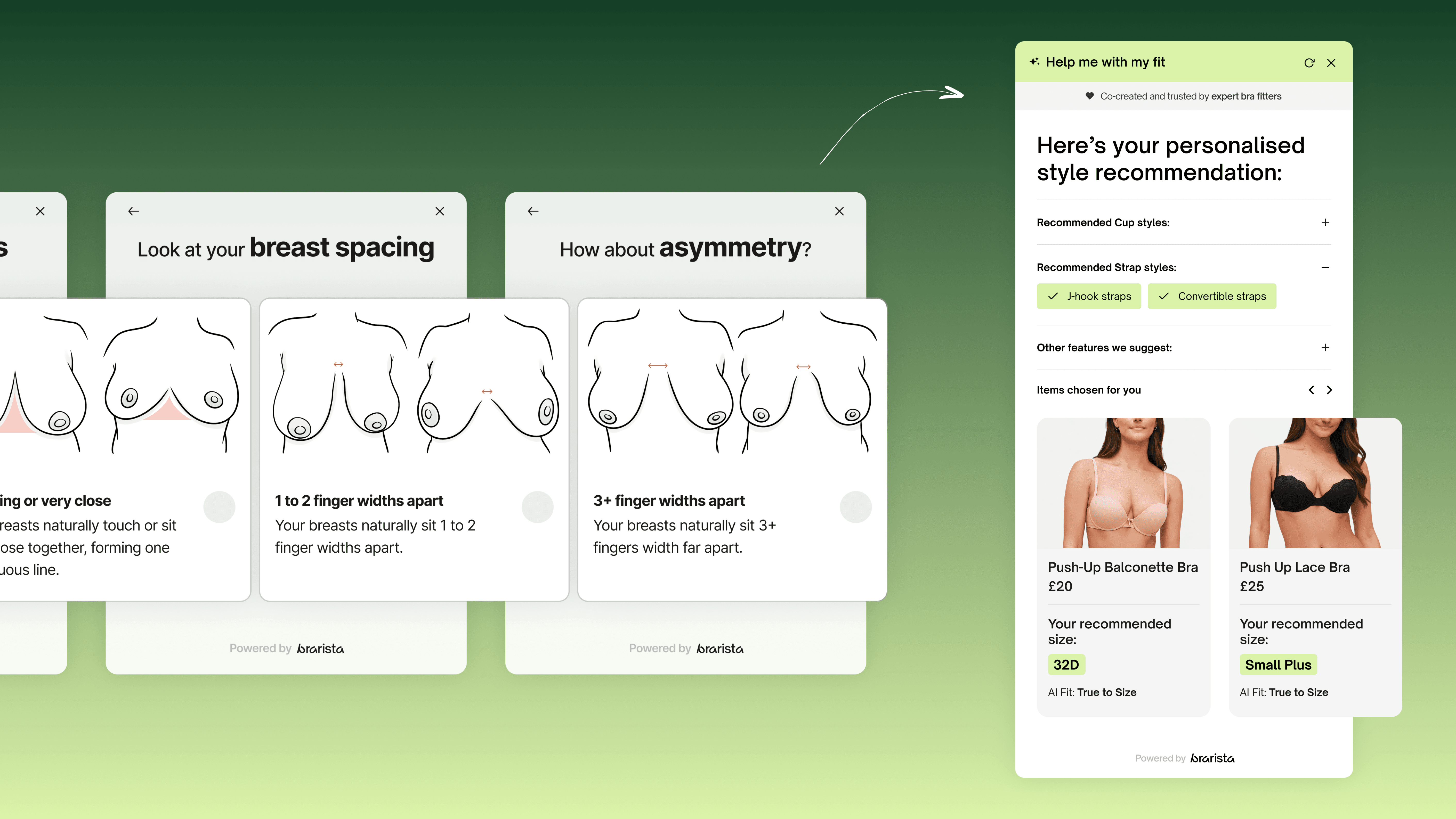
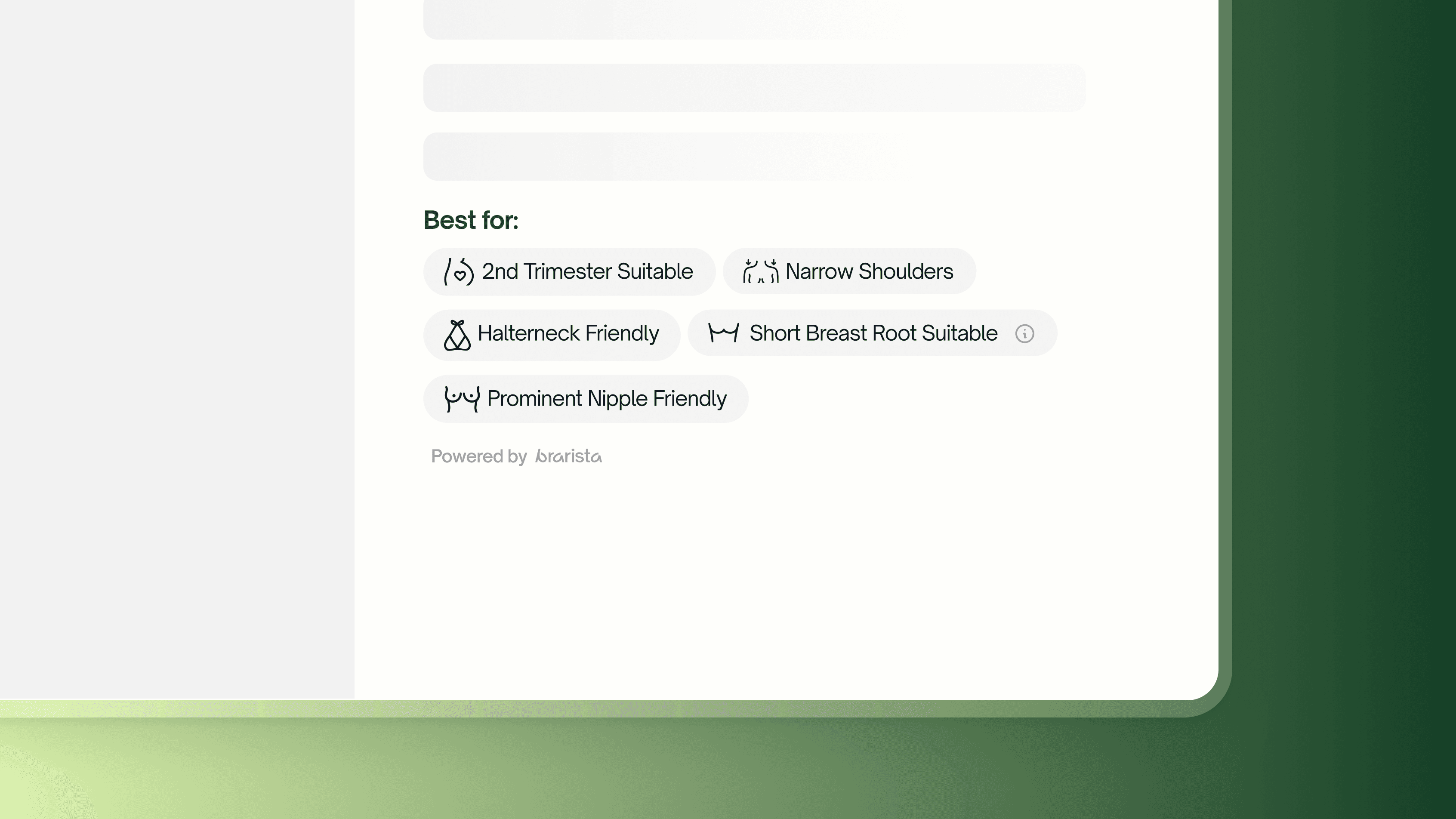
So we started developing what we're now calling "Best For" tags. They are compatibility indicators rooted in the same professional fitting knowledge that powers our AI bra fitting quiz.
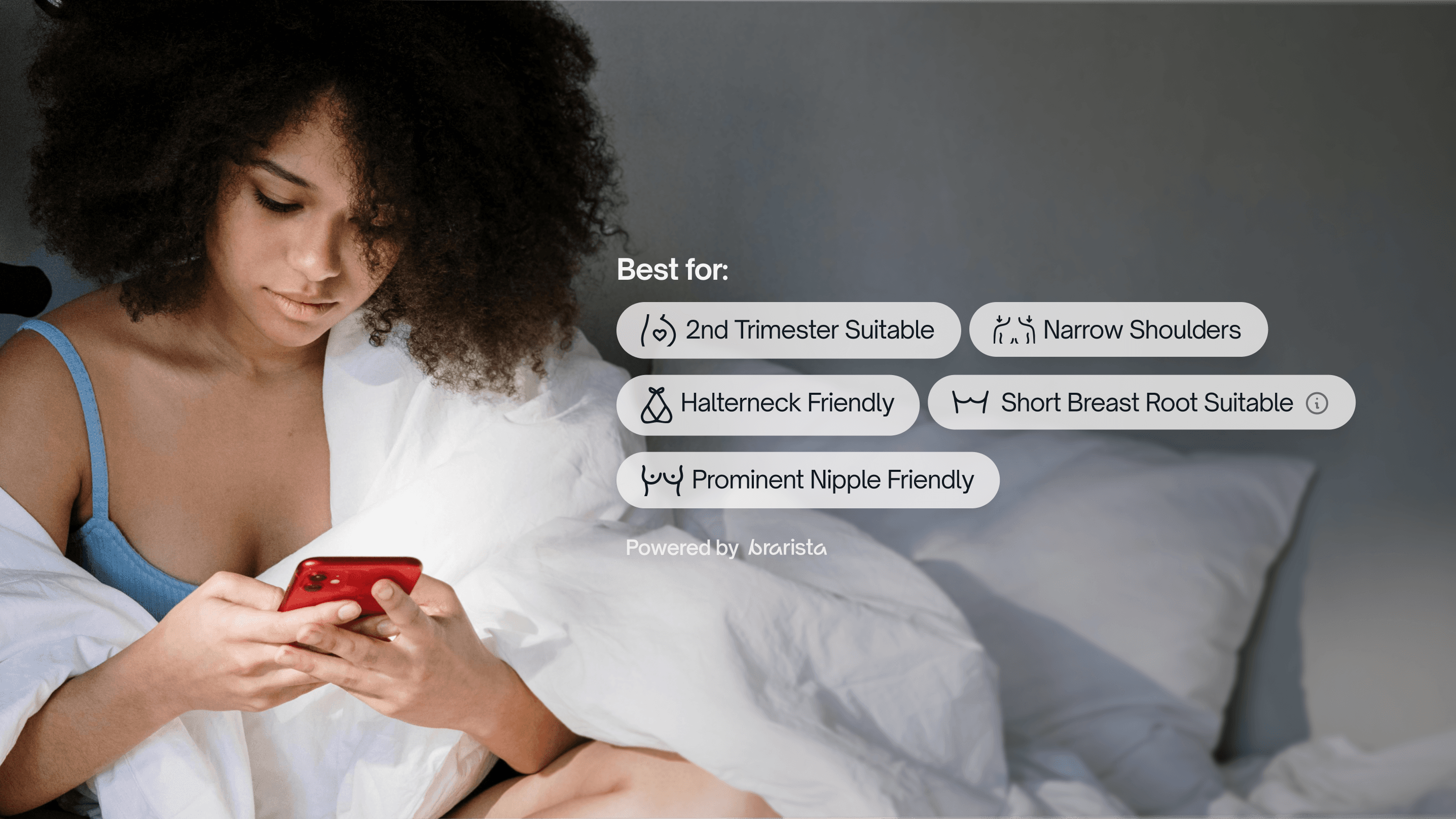
For our first launch, we partnered with Boobydoo, a retailer with a multi-brand catalogue.
We didn't just pull data from their product feed and run it through an algorithm. Our bra fitting team sat down with boobydoo's team and went through their catalogue product by product.
Then we translated that into skimmable tags that now sit directly on each product page, right where the purchase decision happens. It's the same guidance a customer would hear if they walked into a boutique and asked, "Will this work for me?" The difference is it's available instantly, on every product, 24/7.
If you're reading this thinking, "We should really improve how our product pages address fit concerns," you're not alone. Most lingerie retailers recognise the problem. The challenge is solving it in a way that's accurate, scalable, and doesn't require rebuilding your entire site.
You don't have to become bra-fitting experts. You just have to partner with people who already are. The Best For is built to integrate seamlessly into existing e-commerce platforms, without the need to redesign or overhaul your product data. You share your catalogue with us, we work with your team to develop the compatibility tags (fewer than 20 hours required from your team), and we integrate them into your product pages.
If your product pages just describe what a bra is, let’s talk. Book a demo and find out how Brarista can take your business to the next level.
Related articles